3 min read
Header Image Credit: Credit Dave Bewick / Science and Industry Museum
Power Hall: The Andrew Law Gallery at the Science and Industry Museum has reopened, and it is now telling a new story. This building once played a major role in the Industrial Revolution, when coal-powered engines helped change the world. Today, Power Hall is part of a different kind of revolution, one focused on clean energy and a greener future for Manchester.
A Historic Building Made More Sustainable
In order to operate sustainably and comfortably, the Power Hall has undergone careful and extensive renovation. The building’s roof, which stretches the length of a Premier League football pitch, was fully restored using as many original tiles as possible in order to protect its historic character while improving insulation. Additional work has repaired the timber structure, updated drainage systems to cope with increasing rainfall and installed new roof lights to retain heat more effectively.
Sustainable wood-fibre insulation, made from timber industry by-products, has been installed throughout, lowering the building’s carbon emissions. Energy-efficient windows and doors now help maintain a comfortable indoor temperature, while a new digital management system monitors and controls energy use across the gallery.
These changes allow the museum to conserve its historic structure and collections more responsibly, creating a more comfortable environment for visitors and significantly reducing the building’s environmental impact.
Credit Drew Forsyth / Science and Industry Museum
Heating the Hall
One of the most exciting upgrades is a new heating system that uses natural water from deep underground. Water is pumped up from an aquifer beneath the museum and passed through special heat pumps that gently warm the building. This replaces old heating systems that relied on burning gas or coal.
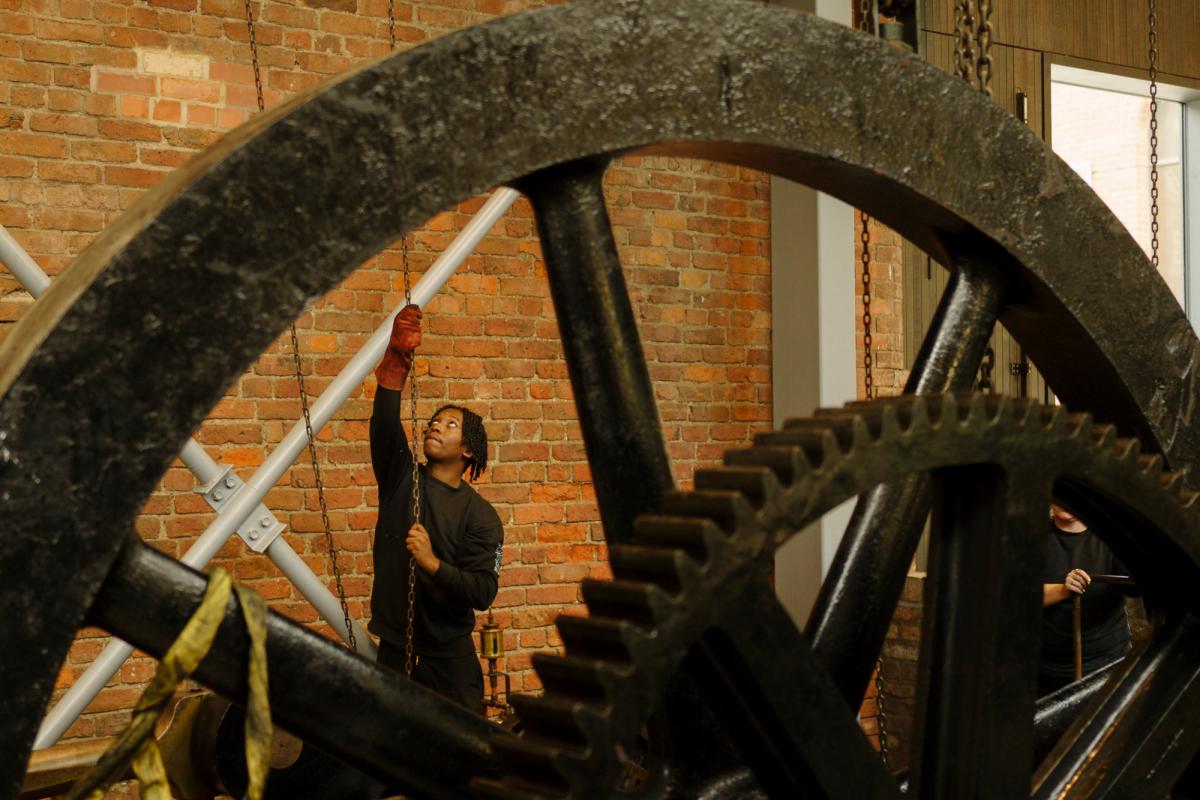
The steam engines in the Power Hall still run as part of the visitor experience, but now the steam produced is captured and used to warm the gallery. Any water used in the system is safely returned back underground or to the nearby River Irwell.
Because of this new system, the museum will produce far less carbon. In fact, the Power Hall’s emissions are expected to drop by 60% by 2030.
What You Can See and Learn
Visitors can see these green technologies live in action throughout Power Hall. The new electric boiler and heat pumps are on display as the latest museum exhibit, and easy-to-follow signs explain how the system works. The steam engines still run, offering the familiar sights, sounds and movement that many people remember, but now they are powered in a much more sustainable way.
Visitors can now also explore a wealth of people stories including people working in sustainable engineering roles in the city today.
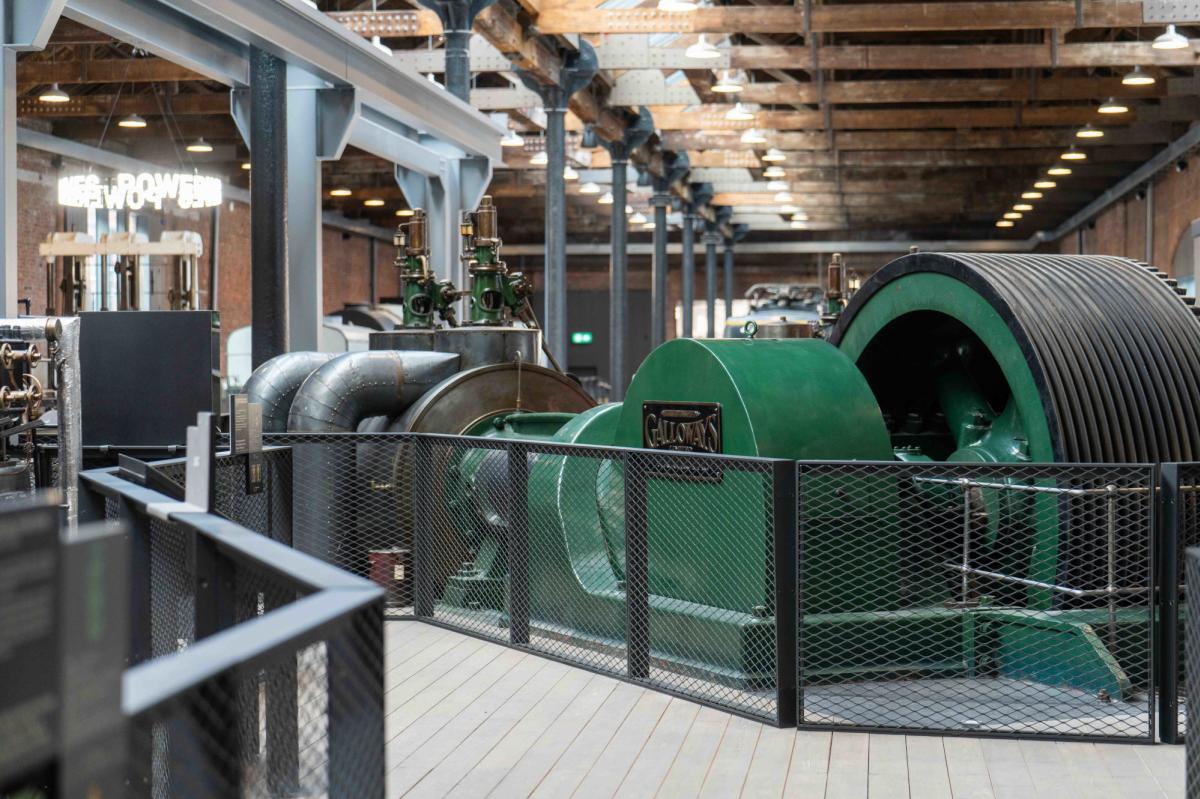
Image Credit: Credit Dave Bewick / Science and Industry Museum
Getting There Sustainably
The museum is close to trains, Bee Network trams and bus routes, and only a short walk from several city centre stations if you prefer to active travel. Visitors are encouraged to travel by public transport, bike or on foot to help reduce their environmental impact.
The Power Hall now stands as a powerful symbol of how the past can guide the future. By pairing historic engineering with modern climate solutions, the museum shows that sustainability and heritage can work together to inspire change.